
The phrase central nervous system is thrown around a lot. But have you ever wondered why there was a need to clarify the “central” part of the nervous system? Well, believe it or not, there is another, separate nervous system, known as the periphery nervous system.
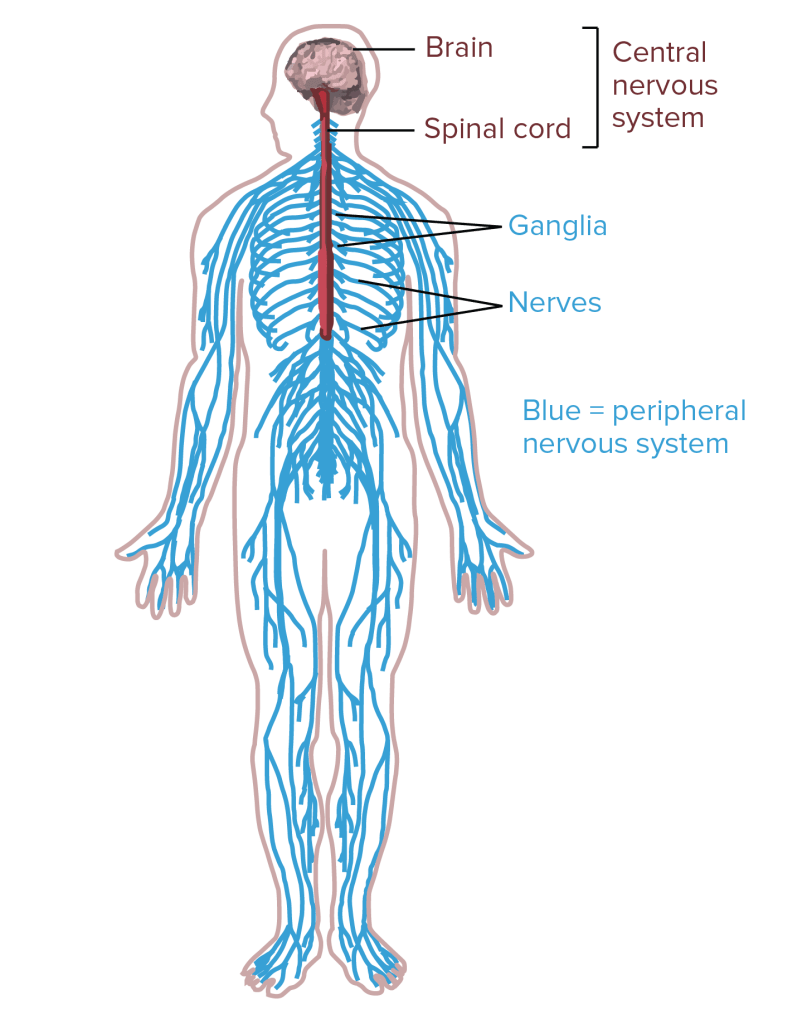
Before diving into the Periphery Nervous system, let’s quickly discuss the Nervous System as a whole. The nervous system is our command system. Consisting of the brain, nerves, and the spinal cord, the nervous system works by sending messages (electrical signals) to parts of the body, and the brain. The nervous system has two parts: Central Nervous System (CNS) and Peripheral Nervous System (PNS).
CNS: The CNS is made up the brain and the spinal cord. The CNS controls most functions of the body, including thinking, speech, and the 5 senses. The CNS refers to neurons, axons, and glial cells contained within the brain and the spinal cord.
What is the Periphery Nervous System?
PNS: The PNS consists of neurons found outside the CNS. This refers to motor and sensory neurons. Sensory neurons bring signals into the CNS, while motor neurons do the opposite; they carry signals from the CNS to other parts of the body. The periphery nervous system basically relays signals given by the CNS to the other parts of the body.
Nerves: In order for the CNS to communicate with PNS, some PNS motor neurons have cell bodies located in the CNS. These motor neurons have extremely long axons that stretch all the way to the muscles they communicate (innervate) with. When several peripheral axons travel a common route, they bundle together to create nerves.
Ganglia: When cell bodies of PNS neurons that aren’t located in the CNS clump together, they form clusters known as ganglia. These ganglia act relay stations between neurons, transferring information between neurons.
So in summary, the periphery nervous system (PNS) uses nerves as roads, and ganglia as junctions, to give commands that originated in the CNS to other organs and muscles and tissue of the body.
 Behind the Brain
Leave a comment