Neurons communicate with two types of signals; electrical and chemical. Neurotransmitters are the chemical signals the send. Neurotransmitters are extremely vital for intra-neuron communication as well as communication with other parts of the body.
The Science Behind Neurotransmitters
First of all, how do neurotransmitters work? Well on a basic level, a neurotransmitter is released by a vesicle from a presynaptic neuron into a synapse. The neurotransmitter then travels through the postsynaptic terminal of the synapse, and is received by its neurotransmitter receptor. This signal then can be translated into new electrical signals.
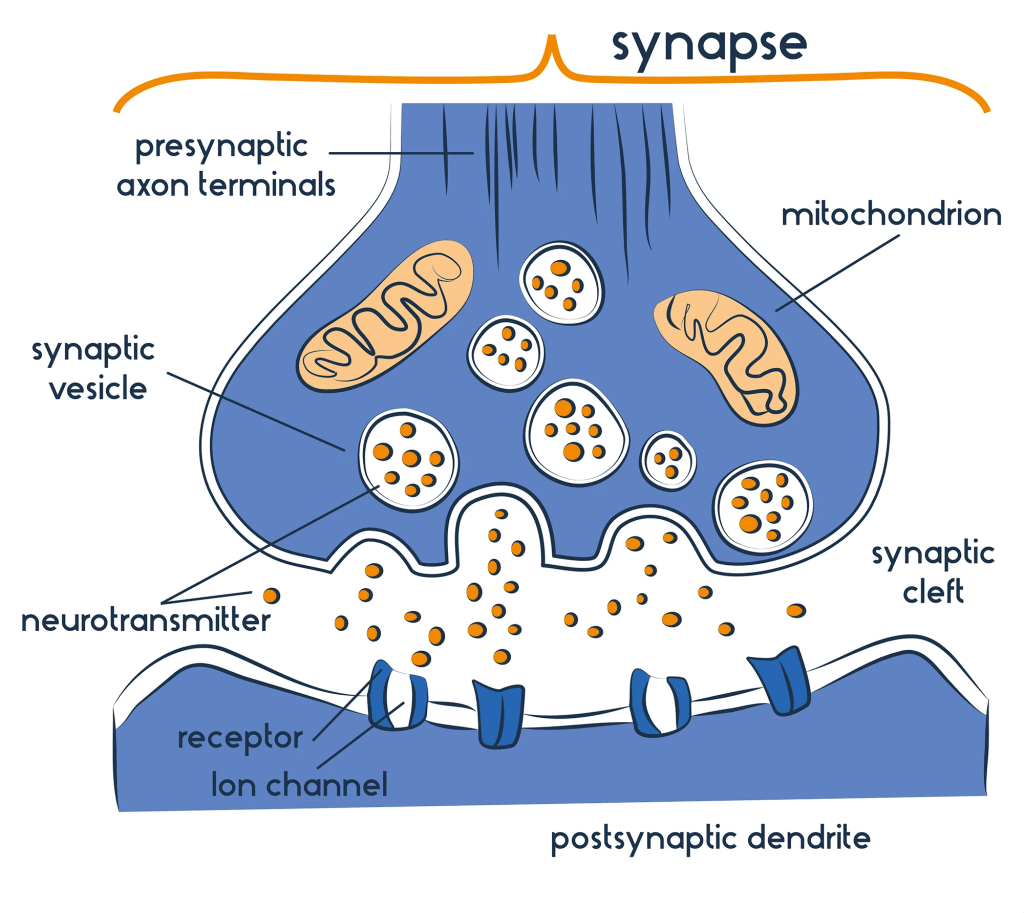
Types of Neurotransmitters:
- Inhibitory: This type of neurotransmitter tries to prevent the postsynaptic neuron from firing another action potential, thus limiting brain activity
- Excitatory: This type of neurotransmitter does the opposite as inhibitory neurons, and instead makes the postsynaptic neuron want to fire a new action potential.
- Modulatory: This type of neurotransmitter influence the behavior of other neurotransmitters. For example, they can lessen the impact an excitatory neurotransmitter has on the postsynaptic neuron. Modulatory neurotransmitters also can influence many neurons at once
After delivering their message, neurotransmitters do one of three things:
- Fade Away: A process known as diffusion
- Uptake: Reused by the postsynaptic neuron
- Degradation: Are broken down by enzymes inside the postsynaptic neuron
Types of Neurotransmitters
Amino Acid Based Neurotransmitters
- Glutamate: The most common excitatory neurotransmitter in your brain, glutamate plays an important role in cognitive functions. Imbalances in glutamate are connected to Alzheimers, Parkinson’s Disease, seizures, and dementia.
- GABA (Gamma Aminobuytric Acid): The most common inhibitory neurotransmitter in your brain, GABA plays a crucial role in preventing problems with anxiety, sleep, or depression. GABA is also very important for the early stages of neuroplasticity.
- Glycine: The most common inhibitory neurotransmitter in your spinal cord, glycine plays an important role in pain transmission, metabolism, and hearing processes.
Monoamine Neurotranmitters
- Histamine: Histamine is the neurotransmitter/messenger of the immune system. It is widely known to cause allergic and inflammatory reactions, along with producing gastric acid in the digestive system.
- Serotonin: Serotonin is known as the “feel good” neurotransmitter, and this isn’t for some silly reason. Serotonin makes us feel calmer, stable and happier. Thus, low levels of serotonin can cause depression, and anxiety.
- Dopamine: Dopamine has five critical functions: Motor Control, Motivation, Reward AKA Satisfaction, Cognitive Function, and Maternal & Reproductive Behaviors
- Epinephrine: Also known as adrenaline, epinephrine is an excitatory neurotransmitter that is responsible for our sense of fear. This neurotransmitter triggers the fight or flight sense in us. Due to its chemical properties, epinephrine raises the heart rate, and thus is found in medications such as EpiPens to treat conditions such as asthma.
- Norepinephrine: Very similar to epinephrine, norepinephrine also trigger the flight or fight sense in us. However, norepinephrine focuses more on blood vessels than the heart.
- Acetylcholine: The most important function of Acetylcholine is to regulate involuntary muscle movements. For example, the heart muscles beating, intestinal peristalsis, which is how food goes through our intestines through the contraction and relaxation of intestines, and gland secretion.
 Behind the Brain
Leave a comment