I went to the theaters to watch Inside Out 2 this Saturday. I really enjoyed the movie, especially the depiction of the new emotions (apart from Envy). I can’t really reveal much without spoiling the movie, but I would definitely recommend watching it. However, at some point during the movie, I began to wonder how accurate the movie was from a neuroscience perspective. So for this post, I’ll focus on Inside Out 1 and dissect it from a neurological perspective.
Emotions
When Riley is born, she develops two emotions, Joy and Sadness (Joy comes first though). This matches with our current understanding of emotions, which tells us that babies intially have two emotions: pleasure, and displeasure. Later on in the film, she develops three more emotions, Anger, Disgust, and Fear. These new emotions plus Joy and Sadness are representative of the six primary emotions (Joy, Sadness, Anger, Disgust, Fear, and Surprise). Although surprise isn’t a character in Inside Out, it is mixed into Joy’s character. All in all, the emotions in Riley’s head are quite accurate from a neurological perspective.

Memories
So memories are a BIG part of the Inside Out world, or in our case, Riley’s mind. They practically determine everything, most importantly, Riley’s personality islands. So what are personality islands? In the film, they are islands that represent a part of Rileys personality and are created when a core memory is formed. Notice the key word “core memory”? SO let’s dig deeper. Core memories are in fact, a concept popularized and somewhat invented by Inside Out. They are memories with strong emotional connections. These memories are tied to their own personality island. Unfortunately, there is no evidence to support that personality islands are formed by core memories so I will have to call personality islands not backed by neuroscience. On the flip side, the colors on the glass spheres representing how memories are tied to emotions very much are accurate. Of course, in our brain, these emotions are represented by chemicals rather than colors.
Long Term Memory
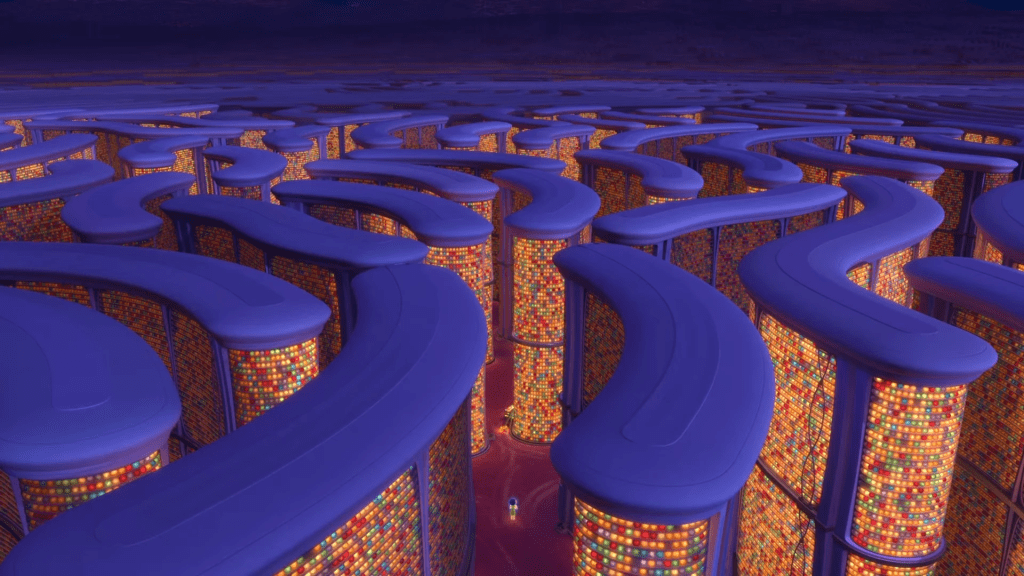
At the end of each day, Joy always sends all the memories to long term where they are stored in a memory-marble storing labyrinth of bookshelves. But is this really how long term memory works? Firstly, memory consolidation does occur during sleep. However, a distinction that Inside Out doesn’t make is the difference in types of long term memories. There are two types of long term memories: Declarative and Procedural. Declarative memories are memories that actively are recalled, while procedural memories are memories that are second-hand nature. For example, the Triple Dent Gum, whenever playing in Riley’s head, is actively recalled and displayed on the projector. However, when Riley is playing hockey, she never recalls the technique to hitting certain shots as they have become instinctual to her.
Train of Thought
The train of thought for me is one of the more forgettable parts of Inside Out. It’s main purpose is to transport ideas and thoughts, and also help Riley daydream? Furthermore, it’s neurologically completely inaccurate. Firstly, its tracks run through the personality islands? So, thoughts, are simply electrical impulses running from one neuron to another. So in order to accurately depict the train of thoughts we would need 35-40 different Trains of Thought running through Riley’s head per minute. Secondly, we daydream when we are at rest, so for me, the concept of a train transporting daydreams is illogical. Lastly, in my opinion, the film solely uses the Train of Thought as a transportation device.
Abstract Thought
Now on the flip side, this is one of my favorite places in Riley’s mind. I feel like the way the animators conceptualized “abstract” was really clever. But let’s get technical. The rostrolateral prefrontal cortex, primarily known for abstract thinking and reasoning, would be the “abstract thought” in Riley’s mind. Unfortunately not much is known about the workings of the “Abstract Thought” so we cannot tell whether it is scientifically accurate or not.
Imagination Land
Imagination land is perhaps one of the more memorable places in Riley’s mind. With the pillow fort, and Riley’s imaginary boyfriend, it is filled with Riley’s daydreams. But in my opinion, it is not accurate. Let me explain why. Scientifically, daydreams are saved as memories. In order to access these daydreams, the brain must call upon the memory AKA use the projector. However we don’t see any of that happening, implying that Riley isn’t actively dreaming up any of Imagination Land. So, Imagination Land should just be a bunch of marbles (memories).
Memory Dump
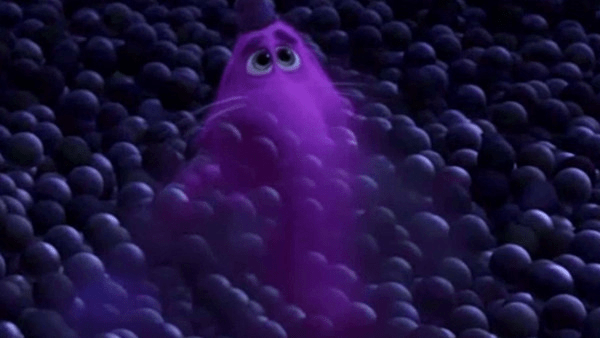
This is where my favorite character, Bing Bong, dies. It’s the location of the climax of the whole story. It’s where memories are lost forever. But science might just save Bing Bong. Some scientists are saying that even in cases of dementia, memories aren’t permanently lost but just temporarily. So perhaps, in Inside Out 3, Bing Bong comes back?
 Behind the Brain
Leave a comment