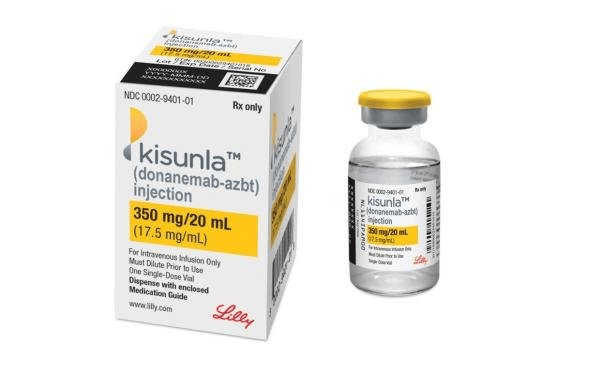
Earlier this summer, a new drug, Kisunla, was approved by the FDA for the treatment of mild Alzheimer’s. Till then, the FDA had only approved one drug for the treatment of mild Alzheimer’s, Lecanemab, and one other treatment for moderate to severe Alzheimer’s. So how did Kisunla get approved for Alzheimer’s?
Drug Approval Process
Getting a drug approved is a lengthy and time consuming process. Often spanning 5+ years or even a decade, the process most likely ends in rejection from the FDA, or recursion to a prior step in the process. But what is this process?
- Drug Development: Identifying a certain molecule you want to interact with. This includes reducing the presence of that molecule, and increasing it’s presence.
- Animal Testing: Testing the drug with animals, often mice or rats.
- Clinical Trials:
- Phase I: Small groups of healthy volunteers are given the drug. This is only to assess the potency of the drug, and whether it is safe for human consumption.
- Phase II: Larger groups of patients with the target condition take the drug to test for effectiveness, and side effects.
- Phase III: Drug taken in a extremely large group of patients to test for safety and effectiveness. Tested alongside a current medication or a placebo.
- New Drug Application: You would submit a report to the FDA with all data from animal testing along with all phases of the clinical trials. The FDA would review your application, and if they believe your drug’s benefits greatly outweigh its risks, they will approve it for marketing. If not, they will reject you, or ask for more data.
Development of Kisunla
Alzheimer’s is theorized to form due to build up of pyroglutamate amyloid-beta plaques. So Eli Lilly and Company, the manufacturers of Kisunla decided to focus on developing a molecule that could reduce the buildup of amyloid-beta plaques. They then created a molecule called Donanemab, with the formula C6452H10038N1708O2013S42 . However, this molecule was marketed as Kisunla.

How Kisunla/Donanemab Works
Donanemab works by binding to the pyroglutamate amyloid-beta plaques. Pyroglutamate amyloid-beta plaques form when the first two amino acids of the amyloid-beta peptide are removed, leading to glutamate (originally the 3rd amino acid in the peptide) being the first amino acid in the chain. Next a complex chemical process called cyclization occurs, converting the glutamate into pyroglutamate. This new peptide is now called pGlu3-Aβ.
In order to not attack normal, non-edited amyloid-beta peptides, Donanemab recognizes the pyroglutamate in pGlu3-Aβ, and binds to it. Once binded, Donanemab uses it’s Fragment crystallizable region (the tail of an antibody) to interact with microglia (the brain’s immune cells). Once activated, the microglia extend their processes (long branching extensions) to ensnare the pyroglutamate amyloid-beta plaque. This causes the plaques to be degraded.
Timeline Of Events
Although reports of Kisunla’s animal testing aren’t available, their human testing dates are. So let’s go through their testing history. Beginning in January of 2021, Lilly released data showing how Donanemab slowed decline in Alzheimer’s patients. Fast forward to June of the same year, and the FDA designated Donanemab as a Breakthrough Therapy. The next month, Lilly showed how Donanemab was slowing cognitive decline by reducing amyloid plaque. In January of 2023, the FDA responded to Lilly’s request for accelerated approval requesting more data. Hence, Lilly did a Phase III trial and presented them at Alzheimer’s Association Conference. After reviewing this new data, on June 2nd, 2024, Kisunla was approved by the FDA for the treatment of Early Symptomatic Alzheimer’s.
 Behind the Brain
Leave a comment