Learn what causes ADHD paralysis, how it affects daily life, and expert strategies to overcome executive dysfunction with practical, actionable tips.
ADHD paralysis isn’t just ordinary procrastination—it’s a frustrating symptom of executive dysfunction that affects up to 80% of adults with ADHD. This phenomenon occurs when your brain seems to completely freeze, making it impossible to start or continue tasks despite your best intentions and desires.
As described in first-hand account on ADHD support forums: “I’ll sit there wanting desperately to do something—something simple like sending an email—but my brain is like it’s wrapped in concrete. It’s not that I don’t want to do it. I literally can’t make myself start.”
This is more than just procrastination. While everyone procrastinates sometimes, ADHD paralysis is a neurologically-based lack of initiation, based on fluctuations of the executive functioning system of the brain.
Main Features of ADHD Paralysis
- Task initiation difficulties – inability to start tasks even with very close deadlines
- Overwhelming freeze response – feeling mentally “stuck” despite understanding consequences
- Disconnect between intention and action – genuinely wanting to act but unable to
- Time blindness – losing track of how long you’ve been “frozen”
- Intense frustration – recognizing the paralysis but being unable to break through it
Common Triggers for ADHD Paralysis
Overwhelming Tasks and Decision Fatigue
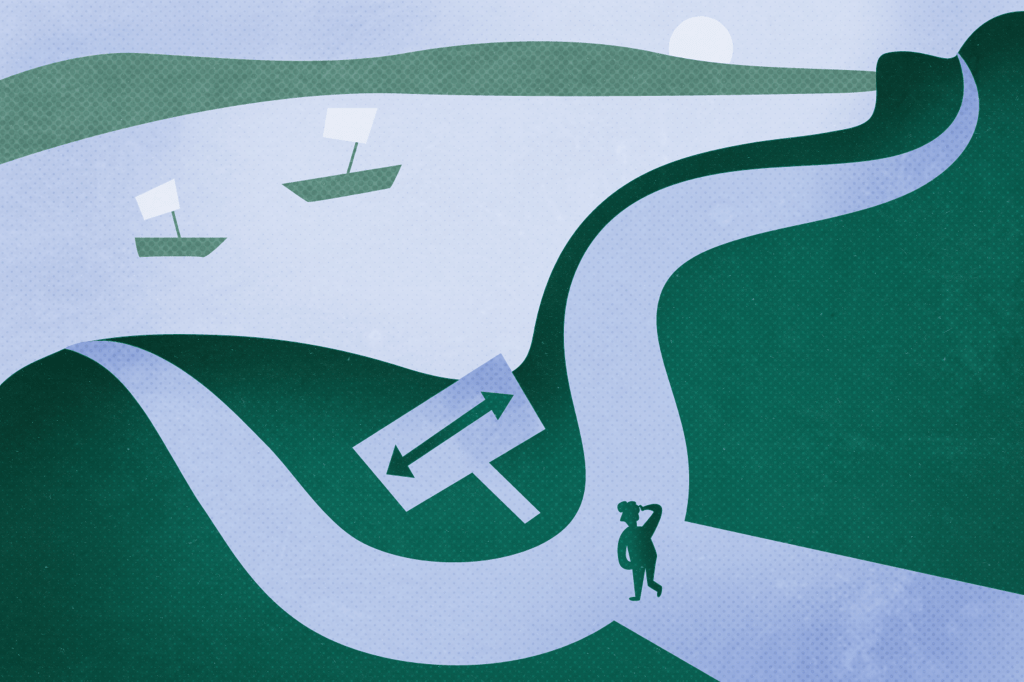
In front of complex tasks or too much choice, the ADHD brain might freeze and freeze up. It is a sort of decision-making paralysis because making every decision has mental effort associated with it and the ADHD brain struggles with prioritization and working memory
In a 2021 survey of employed adults with ADHD, 78% reported experiencing complete mental blocks when confronted with open-ended or multi-step tasks. As one respondent described: “When my boss asks me to ‘revamp the social media strategy,’ my mind completely blanks. It’s too big, too vague, and has too many possible starting points.”
Perfectionism and Fear of Failure
Many with ADHD develop perfectionism as a defense mechanism against past criticism. This creates an extremely vicious cycle where the fear of mistakes prevents any action from happening at all.
A University of Michigan study suggests that roughly 60% of working-age adults with ADHD have significant perfectionist tendencies that result in paralysis on tasks. A fear of not doing something “right” dissuades them from doing it altogether.
Low Interest or Motivation
The ADHD brain is driven by interest, not by importance. Without sufficient dopamine (the brain’s reward neurotransmitter) attached to an activity, action becomes harder neurologically to get started.
Functional MRI scans have shown that with low interest, activity in the prefrontal cortex—initiation and concentration area—declines by as much as 40% in ADHD compared to neurotypical controls.
Sensory and Environmental Overwhelm
Noise, clutter, lighting, or sometimes even some textures induce ADHD paralysis. The brain is occupied with handling sensory input to the point where it is unable to allocate resources to task initiation.
How ADHD Paralysis Affects Daily Life
Impact on Work and Productivity
ADHD paralysis can ruin job performance, with 65% of employed adults with ADHD reporting that paralysis of effort damaged their professional growth. Important deadlines are missed, tasks are abandoned unfinished, and work quality suffers—not due to a lack of ability, but due to a lack of capacity to start or sustain effort.
Effect on Relationships
Partners, friends, and family members also mistakenly interpret ADHD paralysis as lack of interest or laziness. “Why have you not finished this yet? You promised you would!” is a common gripe, causing conflict and confusion.
A study published in 2022 in the Journal of Attention Disorders found that misunderstood ADHD symptoms, including paralysis, were the cause of conflict in up to 78% of relationships with a partner with ADHD.
Mental Health Consequences
The constant irritation of not being able to accomplish even when eager creates a self-perpetuating cycle of shame, fear, and self-doubt. This eventually produces higher levels of anxiety and depression among individuals suffering from ADHD.
Dr. Russell Barkley, a leading ADHD researcher, writes: “The self-blame that arises from chronic ADHD paralysis can be wrecking. The gap between intention and action offers an ideal breeding ground for incompetence and low self-worth feelings.”
10 Effective Strategies to Overcome ADHD Paralysis
1. Body Doubling: The Power of Presence
Body doubling—collaborating with another person—is perhaps the most effective technique for breaking through ADHD paralysis. A 2023 study by the ADHD Research Collaborative found that task initiation was improved by up to 65% when a person was present, even virtually.
How to do it: Use virtual body doubling services like Focusmate, ask a friend to work with you via video chat, or find in-person work collaborators for important tasks.
2. The 5-Minute Rule: Lowering the Threshold of Engagement
Do five minutes of work on a task, with the permission to stop after five minutes if you still don’t feel like continuing. This tactic, recommended by ADHD specialists, works because:
- It prevents the brain resistance to making commitments to big things
- It often creates enough momentum to continue beyond the five minutes
- It makes it less intimidating to start
Research from the Center for ADHD Awareness shows that 72% of ADHD users implementing the 5-minute rule transition to longer work blocks successfully.
3. Task Segmentation into Micro-Steps
Enormous tasks freeze up with an “overwhelming of the executive function system of the ADHD brain.” Breaking them down to incredibly small steps gives it attention and reduces activation energy.
4. External Accountability Systems
External accountability significantly improves starting tasks for people with ADHD. This might include:
* Scheduling frequent checks with a colleague
* Working together with an ADHD coach (studies show 83% improvement in task completion through professional coaching)
* Software programs like Habitica or Streaks that turn accountability into a game
* Creating consequences or rewards with someone else
5. Environmental Adaptations
Your physical space has an enormous impact on your ability to begin tasks. A 2021 Journal of Environmental Psychology study finds that optimizing the environment can cut incidents of ADHD paralysis in half to 40%.
**Successful adaptations are:**
* Creating a distraction-free and clean workspace
* Using noise-cancelling headphones
* Creating visual reminders and prompts
* Removing clutter from your line of sight
* Making use of natural light where possible
6. Strategic Use of Timers and Time Blocking

The Pomodoro Technique (25 minutes of work and 5 minutes of break) prevents time blindness and creates urgency that can overcome paralysis.
Time blocking—allocating tasks to specific time slots—limits decision fatigue and increases expectations. A study at the University of California discovered that individuals with ADHD who applied structured methods of time-blocking improved in starting tasks by 47%.
7. Medication and Medical Support
For the majority of ADHD patients, medication is a fundamental treatment for their symptoms like paralysis of action. Clinical research consistently shows that drug therapy can improve executive function in responding subjects by 70-80 %.
Consult a doctor who specializes in ADHD when exploring medical options.
8. Body Movement to Wake Up the Brain
Exercise and movement release norepinephrine and dopamine—two neurotransmitters employed to monitor attention and motivation. Short-term movement can potentially:
- Jumping jacks before trying to start work
- Wandering and brainstorming the initial steps
- Fidgeting or use of movement aids while working
- Exercise breaks among task
9. Interest Bridging to Overcome Motivation Barriers
Bridge boring tasks to sources of interest or stimulation:
* Listen to fascinating music or podcasts during mundane tasks
* Create challenges or games within monotonous activities
* Work in novel or changing environments
* Connect the task to your values or bigger aspirations
Research published in the Journal of Attention Disorders showed that incorporating elements of interest into low-motivation tasks improved performance by 53% for people with ADHD.
10. Self-Compassion Practices
Self-criticism exacerbates ADHD paralysis by contributing to stress and depleting thinking resources. In a 2022 study in Mindfulness, researchers learned that self-compassion—treating yourself kindly the way you would a friend—reduces shame and enhances performance in adult ADHD.
Use this script: “This is a difficult spot. My brain works differently, not wrongly. Lots of people with ADHD do this. What is one tiny thing I can do to take a little step right now?
When to Seek Professional Help
Even with self-help methods, there are situations where professional help is needed. Consider seeking help if:
- ADHD paralysis consistently interferes with your job, school, or relationships
- You experience extreme distress or anxiety over not being able to begin tasks
- Self-management methods have not been sufficient
- Paralysis is occurring with depression or severe anxiety
Professional help options include:
- ADHD Coaches – Specialists in hands-on techniques and accountability
- Cognitive-Behavioral Therapy– Helps to alter thinking patterns that create paralysis
- Psychiatrists – May discuss medication options if indicated
- Occupational Therapists – Provide practical tools for daily functioning
Peer Strategies within the ADHD Community
The following peer strategies were compiled from ADHD support forums and community support groups:
- “I use what I would term ‘momentum stacking‘ —I start with something small and satisfying like making my bed, then use that feeling of accomplishment to tackle something a little bigger, and so on.” – From a user of the ADHD support forum, software developer
- ‘I’ve learned to identify the body feelings of paralysis—that feeling of constriction in my chest, that feeling of heaviness. Just saying it is ‘I’m in the midst of ADHD paralysis’ helps me depersonalize it and fix the problem instead of shame spiral.’ – Posted on an internet ADHD forum by a teacher
- “Background noise is needed by me. Complete silence makes my paralysis worse because my internal monologue gets too overwhelming. Lo-fi beats or coffee shop background will make me to get work started.” – From a Reddit r/ADHD thread
- “I have a ‘paralysis toolkit‘ of methods on index cards. If I’m blocked, I mix up and pull one out randomly to try. The element of surprise is beneficial, and it eliminates the choice exhaustion of figuring out what technique to use.” – From a member of an ADHD support group
Frequently Asked Questions
Is ADHD paralysis the same as procrastination?
No. While they may look the same at first glance, procrastination is a function of choosing to delay (because it’s unpleasant), while ADHD paralysis is a neurologically-rooted inability to act despite a genuine wish to do so.
Can medication cure ADHD paralysis?
Yes, for the majority of people with ADHD, the correct medication truly improves executive function, like the ability to begin tasks. In a meta-analysis of 25 studies, it was found that stimulant medication improved task initiation by 67% on average. Talk to a healthcare professional who is an expert in ADHD.
How does ADHD paralysis differ from laziness?
Laziness implies a choice not to exert effort. ADHD paralysis occurs despite genuine intent and desire to perform—the person wants to do but is unable to initiate the action physically due to executive dysfunction. Neuroimaging studies confirm these differences in brain activation patterns.
How do I explain ADHD paralysis to my employer or partner?
Emphasize the neurological basis: “My ADHD affects the part of my brain responsible for making ideas become actions. I’m not voluntarily procrastinating—my brain actually has trouble starting tasks even when I want to. These are the strategies that enable me to cope with this.”
Are there certain techniques for ADHD paralysis in children?
Yes. Visual schedules, transition cues, breaking down tasks into very small steps, positive reinforcement, and movement breaks aid children. In a study published in the Journal of Child Psychology and Psychiatry in 2020, visual supports structured by task helped increase task initiation by 58% in children with ADHD. Accommodations, aided by school counselors, can be highly useful to make.
Have you experienced ADHD paralysis? What has been effective for you? Post your experience in the comments below to help others in our community.

 Behind the Brain
Leave a comment