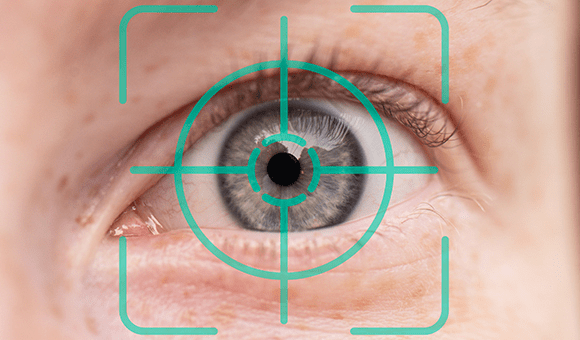
The eyes have long been called the windows to the soul, but emerging research suggests they may also be windows to the brain. Scientists are discovering that eye-tracking technology could revolutionize how we detect Alzheimer’s disease, offering a non-invasive, cost-effective method to identify cognitive decline years before traditional symptoms emerge.
Disclaimer: I was inspired to write this post by my friend Ishan Jain’s research which he presented at WSSEF.
The Silent Progression of Alzheimer’s
Alzheimer’s disease takes a very long time to form. The neurodegenerative process begins decades before memory loss becomes noticeable, with protein plaques and tangles accumulating in the brain long before clinical symptoms appear. By the time most people receive a diagnosis, significant and irreversible brain damage has already occurred. This is why early detection is crucial. The earlier we can identify Alzheimer’s pathology, the better chance we have of slowing its progression through emerging treatments and lifestyle interventions.
Traditional diagnostic methods, including cognitive assessments, brain imaging, and spinal fluid analysis, have limitations. They’re often expensive, invasive, or only effective once the disease has progressed considerably. This diagnostic gap has spurred researchers to explore innovative approaches, and eye-tracking technology has emerged as one of the most promising candidates.
How Eye-Tracking Works
Eye-tracking technology uses specialized cameras and infrared light to monitor where someone is looking, how long they fixate on objects, how their pupils respond, and how smoothly their eyes move. These systems can detect movements and patterns that are imperceptible to human observers, capturing subtle changes in visual behavior that may signal underlying neurological issues.
Modern eye-tracking devices have become very, very sophisticated and accessible. Some systems use standard webcams paired with machine learning algorithms, while others use hardware that tracks eye movements between millisecond. What makes this technology particularly attractive for Alzheimer’s screening is its non-invasive nature. A person simply looks at a screen while the system records their eye movements.
The Brain-Eye Connection
The connection between eye movements and brain health is more profound than many people realize. Eye movements are controlled by a complex network of brain regions, including areas affected early in Alzheimer’s disease. The hippocampus, crucial for memory formation and one of the first regions to deteriorate in Alzheimer’s, plays a significant role in visual memory tasks. Similarly, the parietal cortex, involved in spatial attention and eye movement control, also shows early degeneration.
When these brain regions begin to malfunction, they leave telltale signatures in how we move our eyes and process visual information. Researchers have identified several eye-movement abnormalities associated with Alzheimer’s disease, including difficulties with smooth pursuit (tracking moving objects), impaired saccades (rapid eye movements between fixation points), and altered visual search patterns.
What Eye-Tracking Reveals About Alzheimer’s
Studies have uncovered several distinctive eye-movement patterns in people with Alzheimer’s disease and those at risk of developing it. One key finding involves visual search tasks. When healthy individuals look at a complex scene, their eyes move efficiently, focusing on relevant information while filtering out distractions. People with Alzheimer’s or mild cognitive impairment often show disorganized search patterns, revisiting the same locations repeatedly or struggling to locate target objects.
Pupil response has also emerged as a valuable biomarker. The pupil naturally dilates and constricts in response to cognitive effort, a phenomenon called the pupillary response. Research indicates that people with Alzheimer’s show abnormal pupillary responses during memory tasks, with either exaggerated or diminished reactions compared to healthy controls. This may reflect the brain’s struggle to allocate cognitive resources effectively.
Another promising area involves memory-guided eye movements. When we look at familiar images, our eyes naturally gravitate toward areas we’ve seen before – a form of visual recognition memory. Studies have shown that people in the early stages of Alzheimer’s lose this preferential looking behavior, suggesting their brain is no longer forming or retrieving visual memories normally. This deficit can appear years before conventional memory tests reveal problems.
Smooth pursuit, the ability to track moving objects steadily, also deteriorates in Alzheimer’s disease. Affected individuals often exhibit jerky, fragmented tracking rather than smooth, continuous movements. Similarly, their saccadic eye movements may become slower or less accurate, reflecting the deterioration of neural networks responsible for motor control and spatial attention.
Real-World Applications and Advantages
The potential applications of eye-tracking for Alzheimer’s detection are compelling. Imagine a future where routine eye exams include a quick screening that could flag cognitive concerns, prompting earlier neurological evaluation. This technology could be deployed in primary care settings, senior centers, or even in people’s homes, making widespread screening feasible in a way that brain imaging never could be.
The advantages are significant. Eye-tracking assessments are quick, typically taking just minutes to complete. They’re objective, removing the subjectivity inherent in some cognitive tests and eliminating factors like education level or cultural background that can complicate interpretation. They’re also relatively inexpensive compared to PET scans or MRIs, making them accessible to broader populations.
Perhaps most importantly, eye-tracking could detect changes during the preclinical phase of Alzheimer’s – the window when interventions might be most effective. Several studies have demonstrated that eye-movement abnormalities can distinguish people with mild cognitive impairment from healthy controls with impressive accuracy, and some research suggests these changes may even precede cognitive symptoms.
Challenges and Future Directions
Despite its promise, eye-tracking for Alzheimer’s detection faces challenges. Eye movements can be affected by many factors beyond Alzheimer’s, including other neurological conditions, medications, fatigue, and normal aging. Researchers must develop algorithms sophisticated enough to distinguish Alzheimer’s-specific patterns from these confounding variables.
Standardization is another hurdle. Different research groups use varied protocols and equipment, making it difficult to compare results across studies. The field needs consensus on optimal testing paradigms and diagnostic thresholds before eye-tracking can become a clinical standard.
Nevertheless, progress continues at an encouraging pace. Researchers are combining eye-tracking data with other biomarkers, including genetic risk factors and blood tests, to create comprehensive risk profiles. Machine learning algorithms are becoming increasingly adept at identifying subtle patterns that predict cognitive decline. Some companies have already begun developing commercial eye-tracking systems specifically for cognitive assessment.
Conclusion
Eye-tracking technology represents a paradigm shift in how we might approach Alzheimer’s detection. By providing an accessible, non-invasive window into brain health, it could enable the early identification that’s crucial for effective intervention. While challenges remain, the convergence of neuroscience, technology, and artificial intelligence is bringing us closer to a future where a simple eye test could help protect cognitive health and improve millions of lives. As our population ages and Alzheimer’s prevalence rises, innovations like eye-tracking offer hope that we can detect and address this devastating disease before it steals what makes us who we are.

 Behind the Brain
Leave a comment