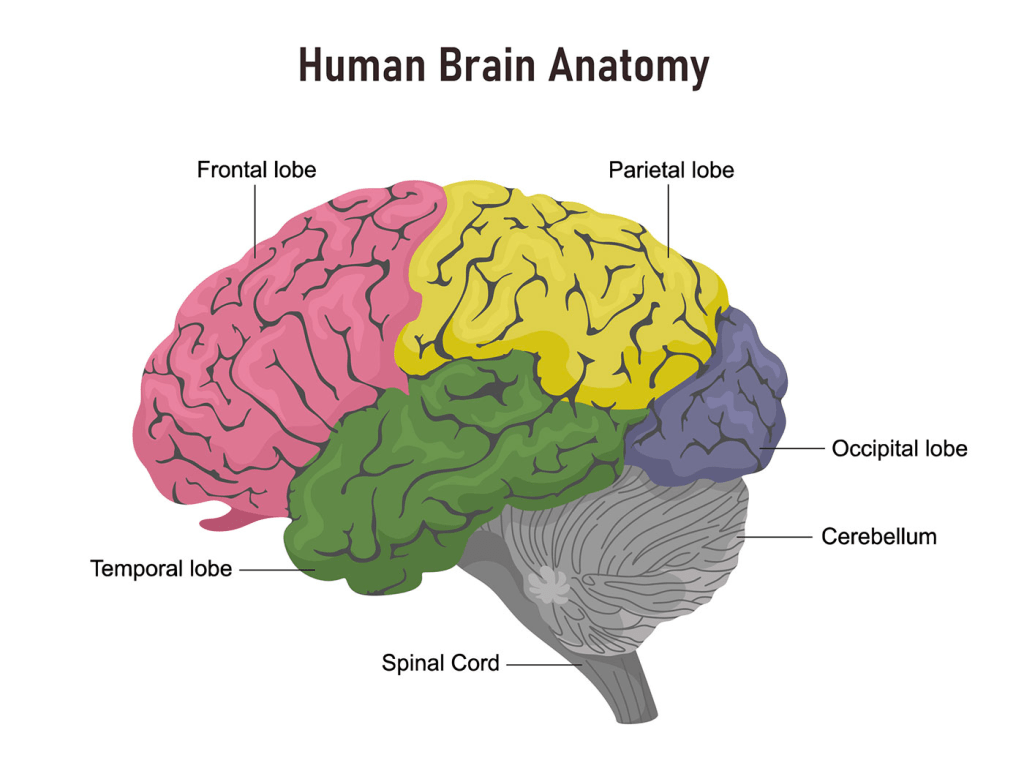
Basic Parts of the Brain:
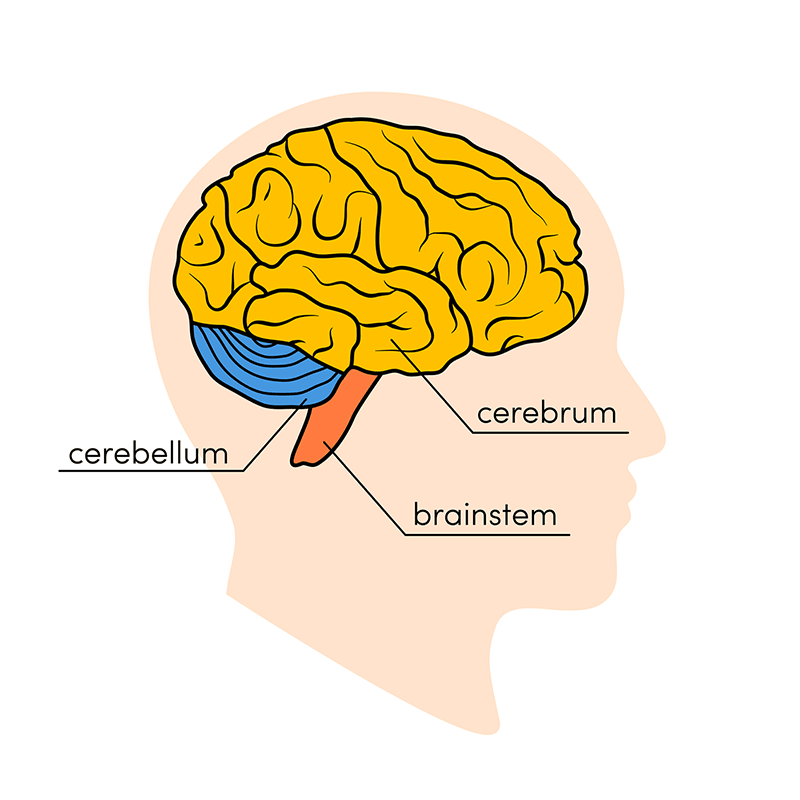
Cerebrum:
The cerebrum is located at the front of the brain. It is by far the largest part of the brain and contains both gray matter (neurons), and white matter (axons/nerve fibers). The cerebrum’s main function is to initiate and coordinate movement, and regulate temperature. The cerebrum also enables speech, reasoning, emotions, and use of our five senses.
Cerebellum:
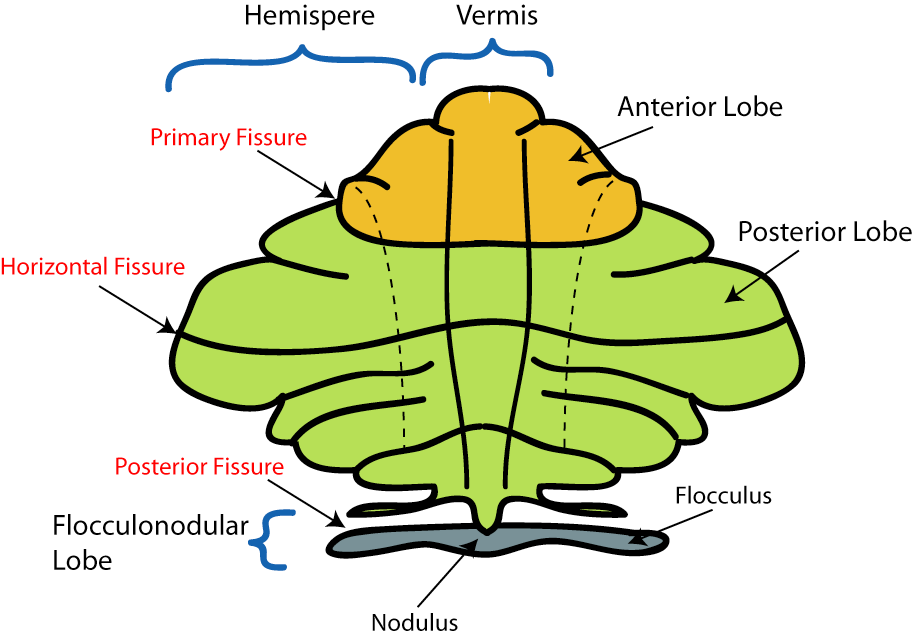
The cerebellum, which literally means “little brain” is located at the back of the brain, under the occipital and temporal lobes. It has two different hemispheres, the outer hemisphere and the inner hemisphere. The outer hemisphere has neurons, while the inner hemisphere communicates with the cerebral cortex. The main function of the cerebellum is to coordinate voluntary muscle movements and balance the body.
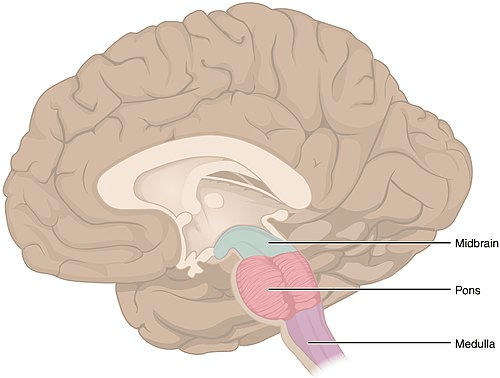
Brainstem:
The brain stem is the part of the brain that connects the cerebrum with the spinal cord. It is located just under the thalamus. The brainstem is responsible for breathing, consciousness, blood pressure, heart rate, and sleep. The brainstem also is the first part of the brain to receive any incoming signals.
Parts of the Cerebrum
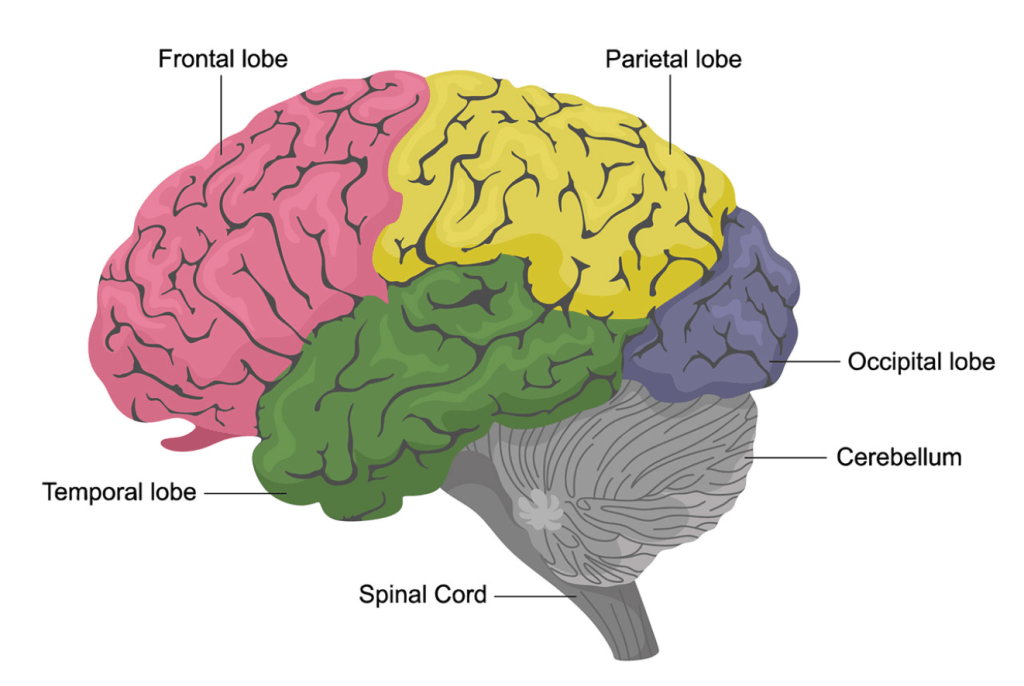
The cerebrum has two hemispheres, the left hemisphere and the right hemisphere. Each hemisphere controls the opposite side of the body. Each hemisphere has four different lobes (sections): Frontal, Parietal, Temporal, and Occipital. Each lobe has its own special function.
- Frontal Lobe: The frontal lobe is the largest lobe of the cerebrum. It is located in the front of the brain, hence the name “frontal”. The frontal lobe is involved with movement, decision-making, and personality development. The sense of smell also comes from the frontal lobe. The frontal lobe also holds the prefrontal cortex, the part of the brain responsible for planning, decision making, working memory, and personality expression. Lastly, the frontal lobe contains the structure, Broca’s Area, which is correlated with speech.
- Parietal Lobe: Located in the middle part of the brain, the parietal lobe in crucial for understanding spatial relationships. The parietal lobe also involved with the interpreting signals coming from the sense of touch. Similar to the frontal lobe, the parietal lobe contains a speech-based structure, Wernicke’s Area which allows us to understand speech.
- Occipital Lobe: Occipital lobe is located in the back of the brain and is associated with vision.
- Temporal Lobe: The temporal lobe, located on the sides of the brain, are involved in short-term memory, speech, musical rhythm, and a bit of smell recognition
Major Structures in the Brain
Pituitary Gland
The pituitary gland, also known as the “master gland”, is located behind the bridge of the nose. This gland controls all glands in the body as well as regulating the flow of hormones from the thyroid, adrenals, ovaries and testicles. It also receives chemical signals from the hypothalamus.
Hypothalamus
Located above the pituitary gland, the hypothalamus sends signals to the pituitary gland. It also regulates body temperature, synchronizes sleep patterns, and controls hunger and thirst.
Amygdala
Shaped like an almond, our two amygdalas sit under each hemisphere of the cerebrum. Amygdalae regulate emotion and memory, and are associated with the “fight or flight” instinct we have.
Hippocampus
Shaped like a seahorse, the hippocampus sits on the underside of each temporal lobe. It is just one part in the hippocampal formation. It is crucial for memory, learning, navigation and perception of space. It receives information from the cerebral cortex.

 Behind the Brain
Leave a reply to Peripheral and Central Nervous System – Behind the Brain Cancel reply