In the last few years, the word “neuroplasticity” has gained a lot of popularity. We hear it all the time in conversations related to learning, memory, and absorbing information. But what exactly is neuroplasticity, and why does it decrease as we grow?
History of Neuroplasticity
Over 100 years ago, William James suggested in his book, Principle of Psychology, that the brain was capable of reorganizing. In 1948, Jerzy Konorski put a name behind this process: Neuroplasticity.
Science behind Neuroplasticity
When a presynaptic neuron sends a electrical signal to a postsynaptic neuron, the signal is sent through a synapse. This synapse has three parts, a presynaptic terminal, a postsynaptic terminal, and a synaptic cleft that separates these two terminals.
The presynaptic terminal contains neurotransmitter filled vesicles. These vesicles only release neurotransmitters if a certain action potential (electrical signal) reaches the vesicle. As the neurotransmitters cross the synaptic cleft, they are received by receptors in the postsynaptic terminal. If the postsynaptic neuron receives enough neurotransmitters, it will fire it’s own action potential. Neuroplasticity is the ability of neurons to modulate, or change the strength of those synapses and the ability to create new synapses.
Mechanisms of Neuroplasticity
- Long-Term Potentiation: As a presynaptic neuron fires an action potential through a certain synapse, the postsynaptic neurons will add receptors. This lowers the stimulation levels the presynaptic neuron has to send out, thus strengthening the synapse.
- Adult Neurogenesis: Neurogenesis is the production of new neurons. After its initial discover, scientists believed that neurogenesis stopped after 18 years of age. By studying the brains of rats, Josef Altman proved that adult neurogenesis did happen in certain mammals. Now, adult human neurogenesis has been proven in the hippocampus and the olfactory bulb.
- Functional Reorganization: Functional reorganization occurs after brain injury or damage. When one part of the brain is damaged, certain functions of the body stop working. For example, if the frontal lobe of the right-most cerebral cortex got damaged, then movements using the left side of your body would be extremely hard to control. So, to compensate for this, the remaining frontal lobe would reorganize to also control the left-side of your body
Age Vs Neuroplasticity
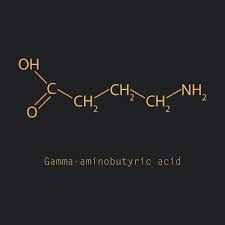
We have heard that neuroplasticity decreases as the years go by. But why does this happen? For us to survive, neuroplasticity has to decrease as we age. While we’re young, we map out our surrounding and absorb a lot of knowledge due to our high neuroplasticity. But having neuroplasticity also means that we can easily forget everything we have absorbed. All the synapse terminals we made, we can break, and all the synapse terminals we broke, we can remake. Therefore, our brain loses its neuroplasticity as we age in order to stabilize everything we have learnt. This decrease in neuroplasticity is regulated through the use of a neurotransmitter called gamma-Aminobutyric acid (GABA). This neurotransmitter inhibit’s brain function and thus reduces neuroplasticity. The interesting thing about GABA is that it switches behavior as our age increases. While we our CNS (Central Nervous System), GABA acts as an excitatory neurotransmitter, prompting postsynaptic neurons to fire action potentials. Thus, several new connections are built. However, in our mature CNS, GABA acts inhibitory.
This switch in GABA nature happens twice. The first time is during delivery. This switch is very abrupt and is a fully reversed switch meaning it results in the same condition it started in: GABA being excitatory. The second switch is a slow process that starts from birth. This is the most researched switch of GABA and is quite literally referred to as the “GABA switch”. There are two main factors that cause the GABA switch to happen.
These steps are written out of chronological order for better reading.
Step #2: Change in Cotransporter
Immature neurons have high levels of the NKCC1 cotransporter. Since NKCC1 creates a Na+ gradient that brings in a bunch of Cl– anions. When a GABA neurotransmitter binds to its receptor on a neuron, a ion pore that allows Cl- to cross the cell membrane in any direction. Since in immature neurons, the higher concentration of Cl- is inside the neuron, chlorine flows out of the neuron. This loss of chlorine results in membrane depolarization (cell is less negatively charged). Depolarization increases the chance that a neuron may fire an action potential.
On the other hand, mature neurons have higher levels of KCC2 cotransporter which exports Cl- ions. Therefore, when the ion pore for Cl- is opened, the higher concentration of chlorine is outside the neuron, so Cl- flows into the neuron, resulting in membrane hyperpolarization (Cell is more negatively charged). This decreases the chance that a neuron fires an action potential.
Step #1: Oxytocin increasing KCC2 in neurons
Oxytocin is a hormone/neurotransmitter known as the “love” hormone. It’s first clear effect on GABA can be seen during the delivery switch. During delivery, oxytocin is released for contractions, so that the baby can be born. This oxytocin is also responsible for the baby’s first GABA switch. Recent studies have shown that oxytocin is also partly responsible for the “GABA switch”. Like the big one. The one we’ve been talking about. Basically, scientists have theorized that oxytocin results in an increase in KCC2 cotransporter, which, as discussed above results in a change in membrane polarization. By monitoring levels of KCC2 in neurons with and without oxytocin in adult mice, one study was able to conclude that oxytocin, is crucial for the “GABA Switch”. Other studies have used other methods to back up this same claim, so the theory about Oxytocin and its role in the “GABA Switch” is pretty strong.
Summary
Alright, so this article was pretty long and did cover a lot of new information, so let’s recap.
- Neuroplasticity is the ability to change the strength of synapses (connections between neurons) and the ability to make new synapses/neurons.
- Neuroplasticity also aids with brain damage, as it can reorganize your brain to make up for functions of the body that were controlled by the damaged part of the brain.
- Neuroplasticity decreases as we grow older in order to stabilize everything we’ve learnt, and to ensure that we remember things.
- This decrease is controlled by a neurotransmitter called GABA.
- GABA changes its behavior from excitatory, to inhibitory when a neuron goes from immature to mature.
- This change is caused by a increase in the cotransporter, KCC2
- An increase in KCC2 is correlated with the intervention of the hormone, Oxytocin.

 Behind the Brain
Leave a reply to The Interesting Role of Peekaboo in Child Development – Behind the Brain Cancel reply