You are watching your favorite comedy show, and then suddenly, a joke make you burst into laughter. But why? What happens in your brain that turns a clever line, a funny face, or an unexpected twist into uncontrollable giggles? Humor is a universal human experience, but its roots lie deep within the brain’s intricate wiring. The neuroscience behind laughter accounts not only for how we process humor; more importantly, it accounts for the influential role humor plays in our lives.

What Happens in the Brain When We Laugh?
Laughter ensues when the brain realizes that something is funny, that usually includes surprise, incongruity, or breaking the expectation. Here’s the process:
- The Frontal Lobe: The frontal lobe, more precisely the prefrontal cortex, interprets and identifies the “logic” of a joke or situation. It is here that the brain finds the humor or resolves the incongruity.
- The Temporal Lobe: The temporal lobe processes the language and meaning so we “get” the joke.
- The Limbic System: When humor is recognized, the limbic system, which regulates emotion, sends a signal to feel pleasure.
- Motor Cortex: Finally, the motor cortex induces the physical act of laughing-coordinating facial muscles, vocal cords, and breathing.
- Dopamine Release: Laughter activates the brain’s reward system, notably the mesolimbic pathway, which releases dopamine, the “feel-good” neurotransmitter. This is the very system activated by food, exercise, and other pleasurable activities. Humor quite literally gives us a natural high.
Why Do We Find Things Funny?
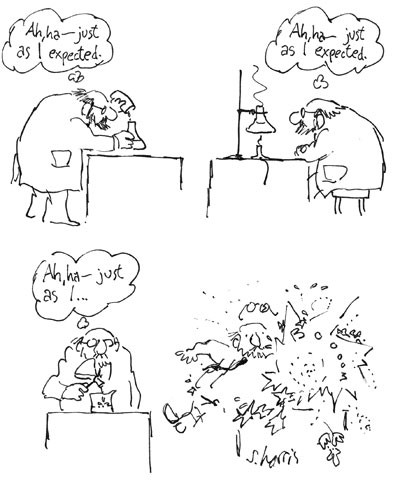
- Incongruity Theory: Much of humor is based on incongruity: the discrepancy between what we expect and what happens. These apply to situations where someone behaves in an absurd or inappropriate manner. Hence, once the brain “solves” the incongruity (gets the joke), we laugh.
- Relief Theory: Humor can also be used to release tension. The brain resorts to laughter as a mechanism to relieve stress or anxiety. This is why people laugh in awkward or nerve-wracking situations. It is a regulating mechanism of the emotions and reducing discomfort.
- Superiority Theory: Another reason we laugh is that the humor makes us feel better or wittier than others. Slapstick comedy involves misfortune occurring to another person, which is usually harmless. Your brain gives you a reward for your reasoning with a laugh to provide a sign of “relief”. This feeling is similar to the “thank goodness it isn’t me” feeling.
The Social Function of Laughter
Laughter is essentially social. It consolidates friendships, resolves tension, and makes us feel safe. Laughter is contagious because of mirror neurons—specialized brain cells that help us mimic and empathize with others’ actions and emotions. When we hear someone laugh, our mirror neurons fire, making us more likely to laugh too. From an evolutionary perspective, laughter most likely developed as a form of social glue: Early humans laughed to show others that a situation was safe after some kind of perceived threat. Laughter shared between groups strengthens the bond and promotes unity/cooperation. Even today, humor is necessary for social bonding: it draws us toward others.
Laughter and Good Health
- Reduces Stress: Laughter reduces the levels of cortisol, a stress hormone, and increases dopamine and endorphins. This transition causes relaxation in the body, reducing anxiety.
- Cardiovascular Health: Laughter increases blood flow, improving cardiovascular function and reducing the risks of heart disease.
- Pain Relieving: Laughter provokes the release of endorphins, which are the natural painkillers of the body, offering temporary pain relief.
- Brain Boost: Humor has been known to enhance memory, creativity, and problem-solving by engaging many parts of the brain simultaneously.
Conclusion
Laughter is something more than a response-it’s an interaction of complex cognition, emotion, and reward. The processing the brain undertakes to yield this pleasure in humor has some social, emotional, and physical purposes. So, the next time you burst into a fit of laughter, remember: this is your brain’s way of keeping you happy, healthy, and connected.

 Behind the Brain
Leave a reply to Anonymous Cancel reply